
Introduction
Finding the right machinery for a construction, maintenance or renovation project can make a significant difference to how smoothly the work progresses. While some jobs require specialist equipment for only a few days, purchasing machinery permanently is not always a sensible option.
This is where Local plant hire in Telford can provide a practical alternative. Instead of investing in equipment that may spend most of its life in storage, contractors, businesses and domestic customers can hire machinery according to the requirements of a particular project.
From temporary power solutions to powered access equipment, choosing the correct machine starts with understanding what the job actually requires.
What Does Local Plant Hire Cover?
Plant hire is not limited to large construction machinery. Depending on the hire company’s range, customers may be able to access equipment for building work, maintenance, temporary power and other practical applications.
TT54 Plant Hire in Telford supplies equipment for industry, construction and domestic projects. Its available equipment includes Genie scissor lifts and generators, providing options for customers with different requirements.
The company is based in Telford and covers Telford, Shrewsbury and the wider West Midlands, with access to major motorway routes that can support delivery and collection arrangements.
Why Hiring Can Be More Practical Than Buying
Buying machinery can involve more than the initial purchase price.
There can also be costs associated with:
- Storage
- Servicing
- Repairs
- Maintenance
- Insurance
- Transportation
- Depreciation
For a contractor who only needs a particular machine for a short project, these long-term responsibilities may not make financial sense.
Hiring allows the customer to obtain the equipment for an agreed period and then return it or arrange collection when the work is complete.
This approach can be especially useful for smaller contractors, tradespeople, event organisers and homeowners completing occasional improvement projects.
Access Equipment for Working at Height
Some projects require workers to reach elevated areas safely and efficiently.
A scissor lift can provide a raised working platform for appropriate construction, installation and maintenance applications. Electric models can be particularly useful for indoor environments where quiet operation and zero exhaust emissions are beneficial.
For example, the Genie GS1932 is a compact electric scissor lift designed for manoeuvrability in tighter spaces. The supplied specifications give it a maximum working height of 25 ft 3 in (7.85 m), a 500 lb (227 kg) platform capacity and a 36-inch roll-out platform extension.
The Genie GS2646 provides a higher working height of approximately 32 ft 1 in (9.96 m), also with a 500 lb (227 kg) platform capacity.
The correct machine depends on the height, access and working conditions of the project.
Temporary Power Can Be Just as Important
Not every project has reliable mains electricity available.
A construction site may still be waiting for a permanent connection. An outdoor event may be taking place in an open field. A temporary warehouse operation may require additional power.
In situations such as these, 20kva generator hire Telford can provide a flexible temporary solution.
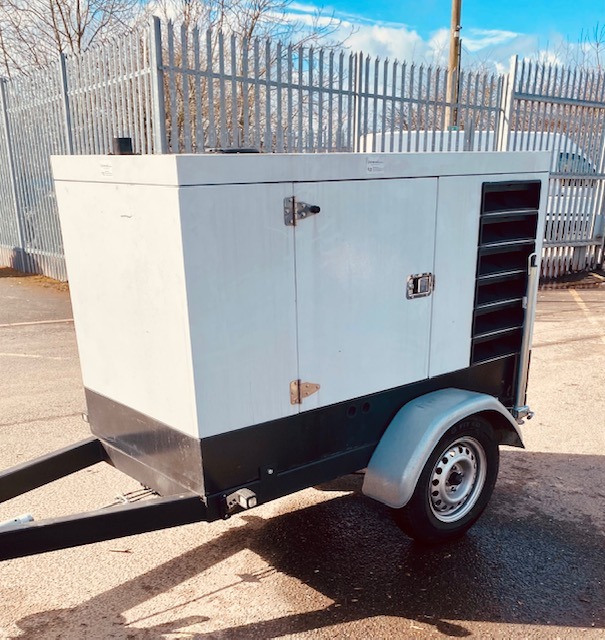
TT54 offers a trailer-mounted generator described in the supplied information as a 3-phase 22 KVA unit, suitable for applications including temporary warehouse power, construction sites, weddings and marquees.
This makes generator hire relevant to much more than emergency backup.
Planning Your Power Requirements
One of the biggest mistakes when hiring a generator is choosing a machine before calculating the required electrical load.
Make a list of everything that needs power.
Depending on the project, this might include:
- Lighting
- Refrigeration
- HVAC equipment
- Tools
- Sound equipment
- Catering equipment
- Pumps
- Temporary site facilities
Once the individual requirements are identified, the total expected demand can be assessed.
A generator should not simply be selected because its headline capacity sounds sufficient. Starting loads and simultaneous use can also influence the appropriate choice.
Generator Hire for Events
Outdoor events often have power requirements that cannot be met conveniently through an existing electrical supply.
Weddings, marquees, markets and similar events may require electricity for lighting, catering, entertainment and other equipment.
A trailer-mounted generator can provide a flexible source of temporary power where a suitable mains connection is unavailable.
However, the generator location should be planned carefully. Noise, ventilation, cable routes and public access all need consideration.
Keeping equipment away from areas used by guests can also help reduce disruption.
Construction Sites and Temporary Power
Construction work can involve machinery and facilities that require electricity before the permanent building supply is ready.
Temporary power may be needed for:
- Site lighting
- Power tools
- Welfare facilities
- Small equipment
- Charging systems
- Temporary offices
- Security systems
A generator can therefore form an important part of early-stage site planning.
The capacity should be matched to the anticipated load, while cables and distribution equipment should be installed and managed appropriately by competent personnel.
Five Things to Consider Before Hiring a Generator
1. Calculate Your Load
Determine what equipment will operate from the generator and estimate the total demand.
2. Decide How Long It Is Needed
The hire duration affects both the booking and the practical fuel requirements.
3. Consider Noise
Generators produce sound, so location matters particularly at weddings, residential projects and public events.
4. Plan the Location
The generator should be positioned appropriately, away from unnecessary public access and in accordance with its operating requirements.
5. Establish Your Budget
The cheapest machine is not necessarily the most appropriate. The goal is to hire equipment that provides adequate capacity without paying for capabilities that the project does not require.
Delivery Can Simplify Equipment Hire
Transportation is an important consideration when hiring plant.
Large or specialist machinery may not be convenient to collect using an ordinary vehicle. Having equipment delivered directly to the site can make project planning easier.
TT54 provides delivery options and is positioned in Telford with access to major motorway routes. This supports service coverage across Telford, Shrewsbury and the wider West Midlands.
Customers should discuss delivery requirements when making their booking rather than leaving transportation arrangements until the last minute.
Making Plant Hire Easier for First-Time Customers
Hiring machinery for the first time can seem complicated, particularly when the customer is unfamiliar with plant equipment.
A straightforward process starts with explaining the project clearly.
Tell the hire provider:
- What work you are doing
- What equipment you need
- Where the machinery will be used
- How long you expect to need it
- Whether delivery is required
- Any access restrictions
- Whether you need guidance selecting equipment
TT54 states that its experienced staff are available to assist customers with equipment enquiries and selection.
Looking After Hired Equipment
Once machinery is delivered, responsibility does not end.
Customers should take reasonable steps to protect hired equipment against theft, damage and loss during the hire period.
Equipment that is not being used should be stored securely. Customers should also follow the relevant operating instructions and ensure that machinery is used by competent operators.
Any accident involving injury or property damage should be reported promptly according to the applicable hire terms.
Benefits of Local Plant Hire in Telford
Choosing a local provider can offer several practical advantages.
Convenient Access
A local company can make collection and delivery easier for projects within the surrounding area.
Flexible Equipment
Customers can hire equipment according to individual project requirements rather than relying on machinery they already own.
Lower Long-Term Commitment
There is no need to purchase equipment that may only be required occasionally.
Professional Guidance
Experienced staff can help customers understand which type of machine may suit their application.
Suitable for Different Users
Plant hire can serve contractors, industrial businesses, event organisers and domestic customers.
Frequently Asked Questions
What equipment can I hire from a local plant hire company?
The range varies between providers. TT54’s supplied information includes electric Genie scissor lifts and a trailer-mounted generator.
Is generator hire useful for events?
Yes. Temporary generators can be useful for events such as weddings, marquees and markets where suitable mains electricity is unavailable.
Can plant equipment be delivered?
Delivery is available through TT54 subject to the company’s arrangements and applicable charges.
How do I choose the right generator?
Start by calculating the electrical demand of everything that needs to operate. Then discuss the required capacity and application with the hire provider.
Is local plant hire only for construction companies?
No. Plant equipment can also be hired for domestic projects, maintenance, events and other suitable applications.
Conclusion
Hiring equipment should be based on the requirements of the job, not simply on the availability of a particular machine. Whether you need elevated access, temporary electricity or another type of plant, understanding the working environment and project demands is the first step.
Local plant hire in Telford provides contractors, businesses and domestic customers with a flexible way to access useful equipment without the commitment of permanent ownership.
From electric scissor lifts for suitable access work to trailer-mounted generators for construction sites, warehouses and events, the right hire equipment can help turn a difficult logistical problem into a manageable part of the project.
The best approach is to plan ahead, explain your requirements clearly and choose machinery that matches the actual conditions of the job.