
Introduction
Industrial spaces are often filled with competing demands. Machinery needs to operate efficiently, workers need a controlled environment, and equipment may have to meet strict safety considerations. At the same time, excessive noise and heat can make enclosed areas uncomfortable and difficult to manage.
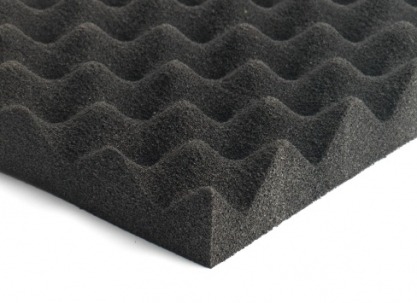
This is where specialist acoustic materials can play an important role. Class 0 Foam is a flexible polyurethane-based material developed for applications where sound absorption needs to be combined with improved fire resistance. It can be adapted for machinery, vehicles, enclosures and other technically demanding environments without requiring a rigid or complicated installation.
1. Why Acoustic Materials Need to Do More Than Absorb Sound
Sound control in an industrial environment is not simply about making a room quieter. Machinery can produce continuous mechanical noise, engines generate vibration and airborne sound, and hard surfaces can cause reflections that amplify the overall acoustic environment.
In many cases, the acoustic treatment also needs to operate close to heat-producing equipment. This means that material selection should take account of both acoustic and fire-related requirements.
Impregnated Class 0 Foam is treated with a mineral compound to provide a high level of resistance to burning. It is designed not to support combustion readily, making it an appropriate material to investigate for applications where fire performance is an important part of the specification.
Its cellular structure simultaneously provides sound absorption, creating a practical combination of acoustic and fire-conscious characteristics.
2. The Role of Impregnation in Fire Performance
The treatment applied to the foam is an important part of its performance.
The underlying material is a flexible, open-cell polyurethane foam. Through mineral treatment, it gains enhanced fire-resistant properties that distinguish it from ordinary untreated acoustic foam.
This does not mean that every installation can automatically be considered fire-safe. The final specification should always be matched to the requirements of the particular project, including temperature, surrounding materials, installation method and applicable regulations.
Nevertheless, where fire performance is a key consideration, a specially treated acoustic foam can provide an advantage over materials selected purely for their sound-absorption capabilities.
3. Designed for Difficult Shapes and Restricted Spaces
Industrial equipment rarely provides a perfectly flat surface for acoustic treatment. Pipes, ducts, engines, brackets and mechanical components can create awkward spaces where standard panels are difficult to install.
One of the practical strengths of Class 0 Foam is its flexibility. It can be cut to size and adapted to curved or irregular surfaces, helping installers make better use of limited space.
This characteristic is particularly valuable inside equipment enclosures and vehicle compartments. Instead of designing the entire installation around a rigid acoustic board, flexible foam can be shaped around the existing structure.
The material can also be supplied in several forms, including sheets, rolls and profiled sections. This provides greater freedom when developing an acoustic treatment for a particular application.
4. Applications Across Different Industries
The requirements of an engine room are different from those of a vehicle cabin, yet both may require effective acoustic absorption.
Engine Rooms
Engines and associated mechanical systems can produce significant levels of noise. Acoustic foam can be incorporated into suitable areas to help absorb reflected sound and improve the overall acoustic environment.
Its flexible nature also makes it easier to work around machinery and structural features.
Generator Enclosures
Generators create persistent engine and mechanical noise, making acoustic treatment an important part of many enclosure designs.
Class 0 profile foam can be used within suitable generator canopy configurations to help absorb sound while providing fire-resistant characteristics.
Heavy Vehicles
Noise from engines and mechanical components can travel into vehicle cabins and other occupied areas. Carefully positioned acoustic materials can help control these unwanted sounds.
Profiled foam can be cut to fit trim panels, headliners and other vehicle components. For visible or exposed applications, fabric-facing options may also be considered.
Marine Equipment
Marine machinery spaces often combine restricted dimensions, heat-producing equipment and demanding acoustic requirements.
For these environments, Class 0 foam can be supplied with suitable facing options, including foil-faced configurations for certain marine and higher-temperature applications.
Industrial Machinery
Manufacturing equipment can generate a mixture of airborne and reflected noise. Acoustic treatment around machinery or within dedicated enclosures can help reduce the amount of sound travelling into surrounding work areas.
5. Benefits Beyond Fire Resistance
The appeal of Class 0 Foam comes from its combination of properties rather than one feature alone.
Effective Sound Absorption
Its open-cell structure enables the material to absorb sound energy, making it useful for reducing reflected and reverberant noise.
Flexible Construction
The material can be shaped and cut for applications where conventional rigid acoustic products are difficult to use.
Non-Fibrous Design
High-density versions are non-fibrous and are designed not to erode or migrate easily under air movement. This can be particularly useful in equipment where airflow is present.
Easy Handling
The foam is relatively straightforward to cut and handle, allowing manufacturers and installers to produce components according to the dimensions of the application.
Optional Self-Adhesive Backing
Self-adhesive versions can be supplied for projects where straightforward installation is desirable.
Different Surface Options
Depending on the intended environment, foam can be combined with facing materials or spray-applied coatings. These options allow the material to be adapted beyond its basic foam configuration.
CFC and HCFC Free
The supplied product information identifies the foam as CFC and HCFC free, which can be relevant when environmental considerations form part of material selection.
6. Building a More Complete Acoustic System
Noise problems are not always solved by absorption alone.
There is an important distinction between absorbing sound and blocking sound. Absorptive foam helps reduce reflected acoustic energy, while barrier materials can help restrict the transmission of sound through a structure.
For this reason, specialist acoustic projects may use composite constructions.
Class 0 Foam can be combined with materials such as lead foil, polymeric barriers and damping sheets. A carefully designed composite can address several aspects of noise control within one assembly.
For example, foam may be used to absorb sound inside an enclosure while a barrier layer contributes to reducing transmission through the enclosure wall. Damping materials can address vibration-related issues.
The most appropriate arrangement depends on the source and pathway of the noise, so technical assessment should come before selecting a particular construction.
7. Custom-Cut Components for Better Installation
Off-the-shelf acoustic materials are not always the most efficient solution for specialist equipment.
A manufacturer may require a foam component to match a particular machine casing, while an automotive supplier may need multiple pieces with precise dimensions for interior panels. In these situations, custom cutting can simplify both production and installation.
Modern manufacturing processes can transform foam blocks, sheets and rolls into components tailored to customer specifications. CNC cutting, band-saw processing and water-jet technology can all be used where appropriate.
Custom-cut kits can also help reduce unnecessary material around complicated shapes and make repeat production more consistent.
For businesses producing equipment in volume, this can be especially valuable because acoustic components can be designed as part of the wider product rather than treated as an afterthought.
8. Selecting the Correct Foam Configuration
There is no universal acoustic material that is perfect for every environment. The right Class 0 foam configuration depends on how and where it will be used.
Before making a selection, businesses should consider:
- The main source and frequency of the noise
- Required sound-absorption performance
- Operating temperature
- Exposure to airflow
- Available installation space
- Surface shape and dimensions
- Fire-performance requirements
- Whether a facing is required
- Whether adhesive backing would simplify installation
- Whether additional barrier or damping materials are necessary
Density and profile can also influence the performance and suitability of the material. For specialist projects, discussing these factors with an experienced technical team can prevent costly material changes later in the production process.
9. Why Manufacturing Experience Matters
Acoustic foam may look like a relatively simple product, but producing components for industrial applications requires more than simply cutting material into shapes.
Experienced manufacturers understand how different densities, profiles, facings and processing methods can affect the finished component. They can also help translate an engineering requirement into a practical manufactured product.
A supplier with established technical and manufacturing capabilities may be able to provide standard foam as well as bespoke components. This is useful for customers who require repeatable dimensions, specialist profiles or composite constructions.
Quality management is equally important. Consistent manufacturing processes help ensure that products meet the specifications agreed for a particular project.
10. A Practical Approach to Industrial Noise Control
The best acoustic solution begins by understanding the problem.
Rather than immediately choosing the thickest or densest material available, businesses should identify where the sound originates, how it travels and where it needs to be controlled. The surrounding temperature, available space and fire requirements should then be considered alongside acoustic performance.
This approach can lead to a more efficient solution. In some situations, a profiled foam layer may be enough. In others, a combination of foam, barrier and damping materials may provide better results.
The objective should always be to match the material construction to the actual application.
Conclusion
Industrial acoustic control is becoming increasingly important as businesses look for better working environments, more controlled machinery spaces and carefully specified equipment.
Class 0 Foam offers a flexible option for applications where acoustic absorption and fire-resistant characteristics need to work together. Its adaptable construction makes it suitable for complex surfaces, while its availability in different formats allows manufacturers to develop solutions for a wide range of equipment.
From generator canopies and engine rooms to heavy vehicles, marine applications and industrial machinery, Impregnated Class 0 Foam can form part of a carefully designed acoustic system. Its ability to work alongside facings, barriers and damping materials also makes it suitable for more advanced composite constructions.
Ultimately, effective noise control is about choosing the right material for the right environment. By considering sound characteristics, fire requirements, temperature, installation conditions and the need for custom manufacturing, businesses can develop acoustic solutions that are safer, more practical and better suited to demanding applications.